Peach variety: Certain cultivars (like Red Haven or Elberta) develop it more often
Ripeness: Fully tree-ripened peaches are more likely to show it than fruit picked early
Growing conditions: Warm days, cool nights, and good hydration encourage healthy cell growth
Genetics: Just like freckles in people, some peaches naturally develop it and others don’t
Good news: It’s more common in organic or locally grown peaches, where fruit is allowed to mature naturally.
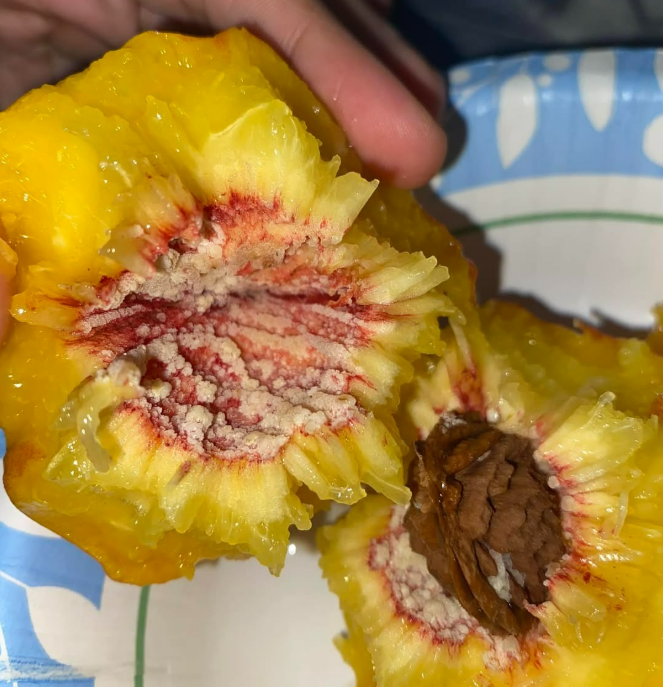
Callus Tissue vs. Mold: How to Tell the Difference
While mold can grow on peaches, it looks very different from callus tissue.
FEATURE CALLUS TISSUE MOLD
Color Bright white or slightly creamy Green, gray, black, or blue
Texture Smooth, cottony, firmly attached to the pit Powdery or fuzzy, spreads easily
Smell No odor; fruit smells fresh Sour, musty, or fermented
Location Only on the pit On skin or flesh, often near bruises
Important: If mold appears on the peach flesh, discard the entire fruit. Callus tissue stays on the pit and does not spread.
Is It Safe to Eat?
Yes. Peach callus tissue is non-toxic and completely safe.
You don’t need to remove it
Simply eat the peach as usual, avoiding the pit
Never eat the pit itself—it contains amygdalin, which can release cyanide if crushed
Pro tip: If you’re making jam, canning, or freezing peaches and the tissue bothers you, just rinse the pit—it washes off easily.
Can You Grow a Peach Tree from a Pit with Callus Tissue?
Many gardeners see callus tissue as a sign of a viable seed—and they’re not wrong.
While callus tissue alone doesn’t guarantee sprouting, it can indicate a healthy pit. If you want to try growing a tree:
Continued on next page: