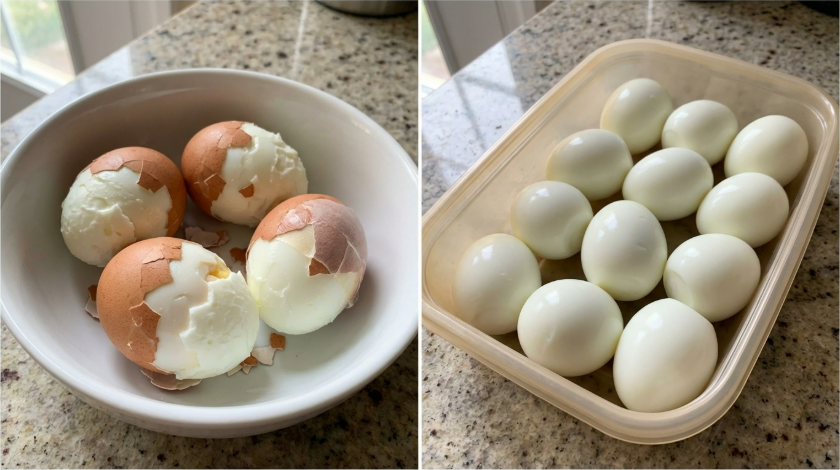
Steam cooks the eggs evenly and creates a thin air pocket between the egg white and the membrane, making peeling almost effortless.
No steamer? You can simmer eggs gently in boiling water, but avoid rapid boiling—it can toughen the whites and cause cracking.
3. Ice Bath + Shake Method (The Final Trick)
Immediately transfer the eggs to a bowl of ice water after cooking. Let them chill for at least 15 minutes. The cold causes the egg to contract, loosening the membrane.
To peel:
-
Gently tap the egg on the counter to crack the shell all over.
-
Roll it between your palms to loosen the shell.
-
Peel under water (or in a bowl of cold water). The water slips under the membrane and helps lift the shell away cleanly.
Pro Tip: Add 1 teaspoon of baking soda to the cooking water. It raises the egg’s pH, further weakening the bond between the egg white and the shell.
What Doesn’t Work (Despite the Myths)
-
Poking holes before cooking: Often leads to cracks and uneven cooking.
-
Adding vinegar to the water: Helps coagulate whites if the egg cracks, but doesn’t make peeling easier.
-
Peeling eggs while warm: The membrane sticks more when the egg is hot.
Why This Matters
Continued on next page: