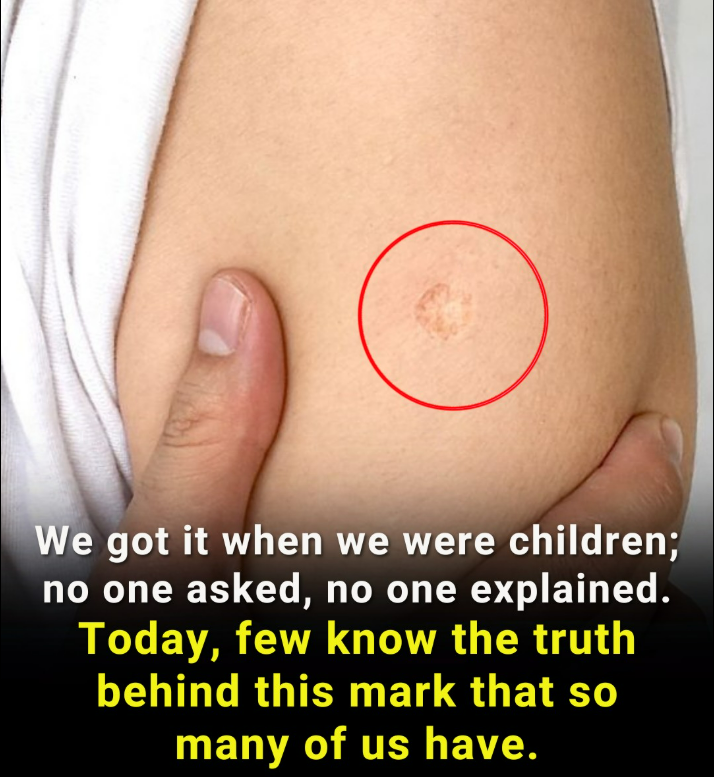
If you grew up in Asia, Africa, Latin America, or parts of Eastern Europe, there’s a strong chance you have a small, round scar on your upper arm. It’s usually about the size of a coin. Slightly indented. Sometimes darker than the surrounding skin.

For illustrative purposes only (iStockphoto)
Many people only notice it years later—while changing clothes, swimming, or seeing old photos. And almost inevitably, the question comes up:
For some, the scar becomes a source of embarrassment. Others are teased about it. Some invent explanations—an old injury, a childhood illness, a burn—because no one ever explained the truth.
That small scar has carried decades of confusion, stigma, and misinformation.
Below are five of the most common misconceptions about the round scar on the arm—and the deeper truth behind each one.
Misconception 1: “It’s a skin disease or a childhood injury”
This is one of the most common beliefs. Many people assume the scar is the result of a skin infection, a boil, chickenpox complications, or an injury they don’t remember clearly. Some even believe it came from a burn, a cut, or an untreated wound that healed badly.
The deeper truth: In most cases, the round scar is caused by the BCG vaccine, which was designed to protect against tuberculosis (TB)—a disease that once killed millions worldwide.
The vaccine is typically given in infancy or early childhood. Because it happens so early in life, most people have no memory of the injection or the healing process. Over time, the event disappears from memory, but the mark remains.
Importantly, the scar is intentional—not accidental. It forms because the vaccine is given just under the skin rather than deep into the muscle. This method triggers a localized immune reaction, which sometimes results in a small ulcer that later heals into a scar.
Nothing went wrong. The body did exactly what it was supposed to do.
Continued on next page: