For many, food is about nourishment and enjoyment. But around the world, some foods come with life-threatening risks—yet people continue to consume them.
Here’s a look at 10 of the most dangerous foods on the planet and why they remain a part of diets worldwide.
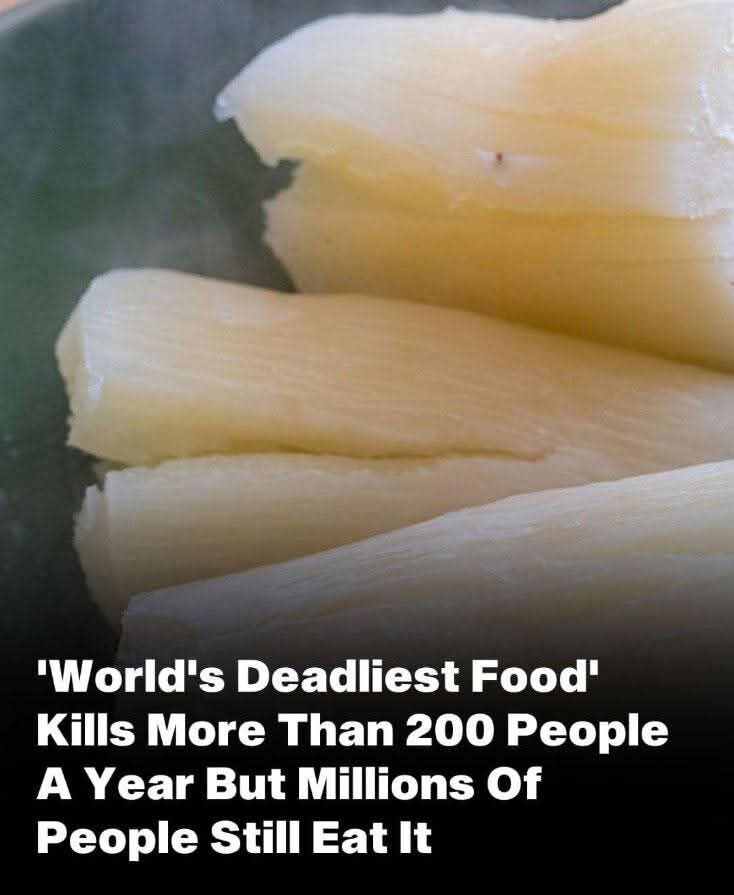
Cassava: The Cyanide-Laced Staple
Cassava may seem like an ordinary root vegetable, but its leaves and roots contain cyanogenic glycosides, which release cyanide when consumed raw or improperly processed. This can lead to cyanide poisoning, causing paralysis, goiters, and even death.
According to the World Health Organization (WHO), cassava poisoning kills about 200 people annually, earning it the title of the “world’s deadliest food.” Despite its dangers, cassava remains a staple for over 800 million people across 80 countries due to its drought resistance and high carbohydrate content. When processed correctly—soaked, fermented, dried, or boiled—the cyanide levels drop, making it safe to eat. For many, cassava isn’t just a choice but a necessity.
Fugu: The Deadly Japanese Delicacy
The Japanese delicacy fugu—prepared from pufferfish—contains tetrodotoxin, a poison “200 times more lethal than cyanide,” according to BBC. Poisoning from fugu can cause numbness, paralysis, and eventually death, all while the victim remains conscious. There is no known antidote.
Each year, about 50 people (mostly amateur cooks or anglers) suffer from fugu poisoning, with a handful of fatalities, according to Japan’s Ministry of Health. Despite the risk, fugu remains a sought-after dish, served as sashimi or in hot pots. Only highly trained, licensed chefs are allowed to prepare it, ensuring the removal of its most toxic parts—the liver, ovaries, and intestines.
Starfruit: A Hidden Neurotoxin
Continued on next page: