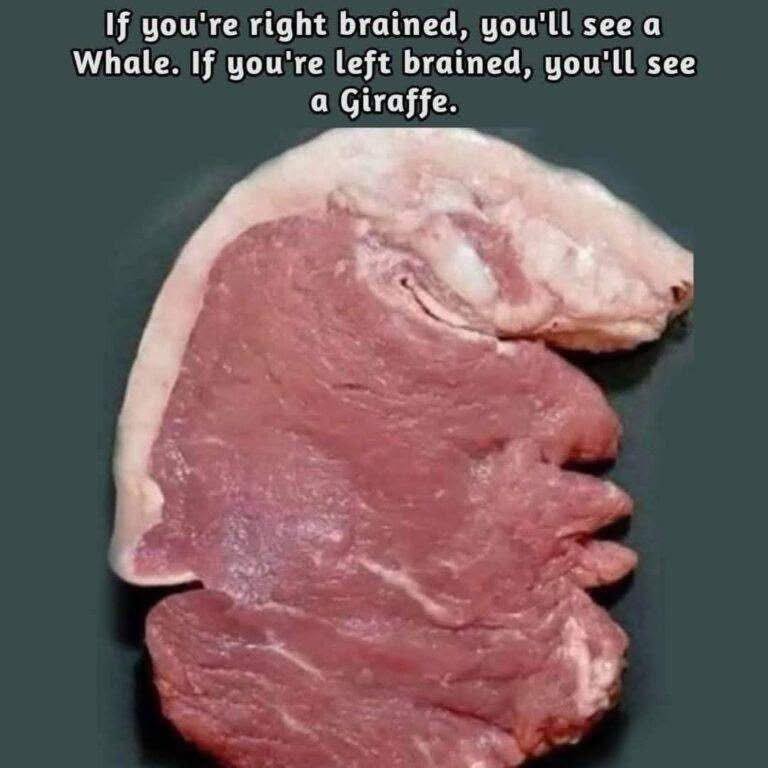
Left-brained = logical and analytical
Right-brained = creative and intuitive
While different brain regions do specialize in certain tasks, this idea is largely oversimplified. In reality, both hemispheres work together all the time. Whether you’re doing math, reading, or creating art, your whole brain is involved.
So seeing a whale or a giraffe doesn’t scientifically reveal which side of your brain “dominates.” It simply shows how uniquely your mind interprets abstract visuals.
Common Mistakes People Make
One common mistake with visual puzzles is jumping to conclusions too quickly. Our brains are built for speed. Once something feels familiar, we lock onto it and stop questioning.
Another factor is confirmation bias. If someone tells you, “It’s obviously a whale,” that’s likely all you’ll see afterward. And that’s exactly why illusions are so effective—they expose how flexible, and sometimes unreliable, perception can be.
How to Analyze the Illusion Step by Step
If you want to approach the image more thoughtfully, try this:
Observe without judgment – Don’t force yourself to see anything specific.
Focus on sections – Look at the top, then the bottom, and note what each part resembles.
Change perspective – Tilt your head or imagine the image rotated.
Trace the outlines – Use your finger or a pen to define shapes more clearly.
Ask others – Different people notice different details you might miss.
Why This Illusion Is So Shareable
Continued on next page: